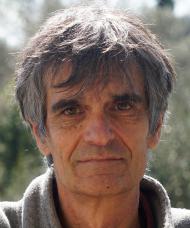
L'Arbre en miroir du monde
L'écologie forestière se penche sur des réalités sensibles et solidaires inhérentes au vivant. Elle a pour finalité de promouvoir le couplage désirable entre une Terre habitable et une Humanité accomplie.
Fonctions
Chercheur écologue au CIRAD (Montpellier), habilité à diriger des recherches (HDR).
Membre de l'unité de recherche "Forêts et Sociétés".
Membre correspondant à l'Académie d'Agriculture de France.
Ancien rédacteur en chef de la revue Bois et Forêts des Tropiques.
Ancien membre de l'IPBES.
Biographe de Maurice Genevoix.
Formation
Ingénieur en Horticulture (ENITHP Angers), reçu premier au concours d'admission parallèle.
Ingénieur en Agronomie tropicale (ESAT Montpellier), classé major de promotion.
Thèse d'écologie au Laboratoire d'écologie terrestre, Université Toulouse III Paul Sabatier, sous la direction de Jacques Lauga et l'encadrement de Gérard Balent, obtenue avec les félicitations du jury.
Contact
CIRAD - TA 10/D - Campus international de Baillarguet - 34398 Montpellier Cedex 5 - France
Mail : jacques.tassin@cirad.fr
Ouvrages
Essais scientifiques
AgriculTerre : refonder l'agriculture au service de tous, Odile Jacob, 2024
Ecoute les voix du monde, Odile Jacob, 2023
Le Chêne, Belin, 2022
Je crois aux arbres, Odile Jacob, 2021
Pour une écologie du sensible, Odile Jacob, 2020
Penser comme un arbre, Odile Jacob, 2018
À quoi pensent les plantes ?, Odile Jacob, 2016
La grande invasion : qui a peur des espèces invasives ?, Odile Jacob, 2014
Romans et récits
Sous les arbres, Salamandre, 2025.
Le Jardinier de Ronsard, Odile Jacob, 2024
Au-devant de Maurice Genevoix, Corsaire Editions, 2019
Forêt marronne, Orphie, 2013
Biographies et essais littéraires
Maurice Genevoix l’écologiste, Odile Jacob, 2020
Genevoix, biographie (avec Aurélie Luneau), Flammarion, 2019
La Vie selon Genevoix, Editions du Petit Pavé, 2018
Maurice Genevoix, Pardès, 2017
Maurice Genevoix survivant de 14, Orphie, 2014
Distinctions littéraires
Prix Maurice Genevoix de la ville de Garches en 2022 pour Je crois aux arbres
Autres publications
Tassin J. (2024). « La vie a besoin d'une pellicule de silence ». Le Monde, 24 janvier 2024.
Barnagaud J. Y., Flores O., Balent G., Tassin J., Barbaro L. (2023). Trait‐independent habitat associations explain low co‐occurrence in native and exotic birds on a tropical volcanic island. Ecology and Evolution, 13(7), e10322.
Tassin J., Kull C. (2023). Forêts tropicales : La reconnaissance des droits communautaires fonciers est un rempart vertueux contre la déforestation. Le Monde, 21 mars 2023.
Tassin J., Roda J.-M. (2021). À la source de la déforestation, il y a une incapacité dramatique à entrevoir la misère de la population mondiale. Le Monde, 20 mars 2021.
Tassin J. (2020). La solidarité, remède et vaccin. Reporterre, 14 avril 2020.
Tassin J. (2020). Le crépuscule du toucher. Libération, 9 avril 2020.
Tassin J. (2020). Intelligence des plantes : les maux des mots. In L'intelligence des plantes en question (M.-W. Debono ed.). Paris, Hermann.
Tassin J. (2020). L'intelligence des plantes en question. BALISES le magazine de la Bpi, 6 janvier. link
Tassin J. (2020). Le vivant est plainement solidaire. Libération, 26 novembre.
Tassin J. (2019). Une éthique éditoriale et une intégrité sciuentifique au service du Sud. NBois et Forêts des Tropiques, 339 : 3-5. link
Tassin J. (2019). Est-ce dans une posture mimétique avec le vivant que se tient notre salut ? Libération, 26 novembre
Tassin J. (2019). Arbres évadés. Du marronage au compagnonnage. Jardins de France (653) : p. 55-57.
Tassin J., Atlan A., Beau R., Léger F., Prévot A.-C. (2018). Pour une écologie plus sensible. Libération, 01 décembre.
Clément G., Coccia E., Kremer A., Tassin J., Thiéry S. (2018). Migrer, une condition d'existence du vivant. Libération, 20 septembre.
Tassin, J. (2017). User de pesticides pour contrôler les espèces invasives : les facettes d'un paradoxe éthique. Revue d’Ecologie (Terre et Vie) 72(4) : 425-438.
Tassin, J. (2017). La plante en toute conscience. La Garance Voyageuse, 119 : 18-22.
Tassin J., Thompson K., Carroll S.P., Thomas C.D. (2017). Determining whether the impacts of introduced species are negative cannot be based solely on science: a response to Russell and Blackburn. Trends in Ecology and Evolution, 32 (4) : 230-231.
Tassin, J. (2017). Cette manière singulière qu'ont les plantes d'être au monde. Nature et Progrès 111 : 10-12.
Tassin, J. (2017). La lutte contre les espèces invasives dans les territoires insulaires. In : Caron Patrick (ed.), Valette Elodie (ed.), Wassenaar Tom (ed.), Coppens D'Eeckenbrugge Géo (ed.), Papazian Vatché (ed.). Des territoires vivants pour transformer le monde. Versailles : Ed. Quae, p. 103-107. (Agricultures et défis du monde).
Tassin, J. (2017). De l'art de composer avec le vivant. Nature et Progrès (112) : 2 p.
Tassin, J. (2017). Qu'est-ce qu'un arbre ? Etudes Héraultaises 48 : p. 188-189.
Tassin , J. (2016). Les espèces invasives. Revue Juridique de l'Environnement 3(2016) : 497-507.
Tassin, J. (2016). Les plantes invasives : un ajustement du vivant à notre monde. In : Les objectifs de développement durable : opportunités méditerranéennes. Cosimo Laricignola (ed.), Bibliothèque de l'IREMMO, L'Harmattan.
Tassin, J., C. Kull (2015). A melting pot world: a reply to Speziale et al's native culture proposal. Conservation Biology 29(2) : 593-595.
Tassin, J., Laizé, A. (2015). Facteurs biologiques et structuraux de l’invasion de la liane Merremia peltata dans les habitats forestiers de Mayotte. Revue d’Ecologie (Terre et Vie) 70, 151-161.
Tassin, J. and C. Kull (2015). Facing the boader dimensions of biological invasions. Land Use Policy 42 : 165-169.
Tassin, J. (2015). André Aubréville (1897-1982), a pioneering forester and a visionary mind. Bois et Forêts des Tropiques 323, 7-18.
Kull, C., Alpers, E.A., Tassin, J. (2015). Marooned Plants: Vernacular Naming Practices in the Mascarene Islands. Environment and History 21, 43-75.
Haury, J., Tassin, J., Renault, D., Atlan, A. (2015). Évaluation socio-économique et gestion des invasions biologiques. Revue d'Ecologie (Terre Vie) 70, 172-174.
Tassin, J. (2015). Les plantes invasives : un ajustement du vivant à notre monde. CIHEAM, Watch Letter 33, 5 p.
Kull, C., Tassin, J., Carrière, S. (2014). Approaching invasive species in Madagascar. Madagascar Conservation and Development 9, 60-70.
Tassin, J. (2014). Les plantes dans le sillage des hommes, in: Soulancé, D., Duhourcau, J.-L. (éds.). Quand l'homme voyage. L'Harmattan, pp. 161-176.
Kull, C., Carrière, S., Moreau, S., Rakoto Ramiamantsoa, H., Tassin, J. (2013). Melting pots of biodiversity: tropical smallholder farm landscapes as guarantors of sustainability. Environment : Science and Policy for Sustainable Development 55: 6-16. link
Andriantsaralaza, S., M. Pedrono, J. Tassin et al. (2013). The role of extinct giant tortoises in the germination of extant baobab Adansonia rubrostipa seeds in Madagascar. African Journal of Ecology 52(2): 246-249. link
Tassin, J. (2013). Quantifier la nature. Le Courrier de la Nature 276: 36-38.
Tassin, J. (2013). Imiter la nature en agro-écologie ? Nature & Progrès 91: 38-39.
Dupuy, S., G. Lainé, J. Tassin et al. (2013). Characterization of the horizontal structure of the tropical forest canopy using object-based LiDAR and multispectral image analysis. International Journal of Applied Earth Observation and Geoinformation 25: 76-86. link
Verhaegen, D., A. Assoumane, J. Serret, S. Noe, C. Chambrey, B. Favreau, A. Vaillant, G. Gateblé, A. Pain, C. Papineau, L. Maggia, J. Tassin, J.-M. Bouvet (2013). Structure and genetic diversity of Ixora margaretae an endangered species: a baseline study for conservation and restoration of natural dry forest of New Caledonia. Journal for Nature Conservation 9: 511-524. link
Tassin, J. (2012). Entre natures et cultures : penser les invasions biologiques aux échelles locales. In : Raineau L., Poireau-Delpech S. Pour une socio-anthropologie de l'environnement, Panthéon Sorbonne. Editions l'Harlattan, Paris, pp. 225-232.
Tassin, J., H. Rangan, et al. (2012). Hybrid improved tree fallows: Harnessing invasive woody legumes for agroforestry. Agroforestry systems 84: 417-428. link
Tassin, J. (2012). La résilience au fil de l'eau. Bois et Forêts des Tropiques 311: 3-4.
Tassin, J. (2012). L'agrosystème est-il un écosystème ? Cahiers de l'Agriculture 21(1): 57-63. link
Tassin, J. and C. Kull (2012). Pour une autre représentation métaphorique des invasions biologiques. Nature Sciences Société 20(4): 404-414. link
Kull, C. and J. Tassin (2012). Australian acacias: useful and (sometimes) weedy. Biological Invasions. 14: 2229-2233. link
Wilson, J. R. U., Gairifo C., et al. (2011). Risk assessment, eradication, containment, and biological control: global efforts to manage Australian acacias before they become widespread invaders. Diversity and Distributions 17: 1030-1046. link
Kull, C. A., J. Tassin, et al. (2011). The introduced flora of Madagascar. Biological Invasions. DOI: 10.1007/s10530-011-0124-6Online link
Kull, C. A., C. Shackleton, et al. (2011). Adoption, use, and perception of Australian acacias around the world. Diversity and Distributions 17: 822-836. link
Verhaegen, D., H. Randrianjafy, et al. (2011). Histoire de l'introduction et de la domestication de l'eucalyptus à Madagascar. Bois et Forêts des Tropiques 309(3): 17-25.
Tassin, J. (2011). Des arbres en mal de dispersion ? Le Courrier de la Nature 253: 20-25. link
Tassin, J. (2011). Quand l'agro-écologie se propose d'imiter la nature. Courrier de l'environnement de l'INRA. 61: 45-53. link
Tassin, J. (2011). Arbres et arbustes introduits dans les îles tropicales. Editions Orphie. Paris, 302 p. link
Tassin, J. (2011). Qu'est l'écosystème forestier devenu ? Revue Forestière Française 63(1): 93-94. link
Tassin, J. (2011). Les plantations forestières industrielles à l'épreuve des représentations de la nature. Bois et Forêts des Tropiques 309(3): 9-16. link
Tassin, J., A. P. Missamba-Lola, et al. (2011). Biodiversité des plantations d'eucalyptus. Bois et Forêts des Tropiques 309(3): 27-35. link
Tassin, J., G. Thiébaut, et al. (2011). Objectiver la perception des invasions biologiques. Revue d'Ecologie (Terre Vie) 67: 195-198. link
Tassin, J. (2010). Editorial - Baobabs : un genre particulier. Bois et Forêts des Tropiques 306: 4-5. link
Tassin, J. (2010). Invasions biologiques : le jeu d'une mauvaise nature ? Nature et Progrès 79: 10-11.
Tassin, J. (2010). Plantes et animaux venus d'ailleurs : une brève histoire des invasions biologiques. Editions Orphie. Paris, 125 p. link
Tassin, J., M. Boissenin, et al. (2010). Can Ptilinopus greyi (Columbidae) disperse seeds from New Caledonia's dry forests? Pacific Science 64(4): 527-532. link
Andriantsaralaza, S., M. Pedrono, et al. (2010). Baobabs de Madagascar : un anachonisme de la dispersion ? Bois et Forêts des Tropiques 306(4): 7-15. link
Tassin, J. (2010). Le réchauffement climatique va-t-il conduire les petites îles à être englouties sous les invasions biologiques ? VertigO 10(3). link
Tassin, J. et M. Cotignola (2009). The elevational gradient of plant species richness in maquis of New Caledonia. Acta Botanica Gallica 156(3): 469-475. link
Tassin, J., J. Triolo, et al. (2009). L'évolution des stratégies de lutte contre les invasions végétales à l'Ile de La Réunion. Revue d'Ecologie (Terre Vie) 64(2): 101-115. link
Tassin, J., R. Rakotomanana, et al. (2009). Proposition d'un cadre de représentation des bioinvasions en milieu rural : cas de Acacia dealbata à Madagascar. Bois et Forêts des Tropiques 300(2): 5-16. link
Tassin, J. (2009). La représentation du vivant : nous n'avons jamais été modernes. Nature et Progrès 71: 12-13.
Tassin, J., J. M. Médoc, et al. (2009). Can invasion patches of Acacia mearnsii serve as colonizing sites for native plant species on Réunion (Mascarene archipelago)? African Journal of Ecology 47: 422-432. link
Tassin, J., R. Bellefontaine, et al. (2009). Evaluation préliminaire des risques d'invasion par les essences forestières introduites à Madagascar. Bois et Forêts des Tropiques 299(1): 27-36. link
Tassin, J., N. Barré, et al. (2008). Effect of ingestion by Drepanoptila holosericea (Columbidae) on the seed germination of Santalum austrocaledonicum (Santalaceae). Journal of Tropical Ecology 24: 215-218. link
Derroire, G., J. Tassin, et al. (2008). Flowering and fruiting phenology in maquis of New Caledonia. Acta Botanica Gallica 155(2): 263-275. link
Tassin, J. (2008). Vers un autre regard sur les invasions biologiques. Le Courrier de la Nature 237: 20-25. link
Kull, C. A., J. Tassin, et al. (2008). Invasive Australian acacias on western Indian Ocean islands: a historical and ecological perspective. African Journal of Ecology 46(4): 684-689. link
Tassin, J., J.-M. Sarrailh, et al. (2007). Essences forestières et invasions : des systèmes de prédiction de plus en plus fiables. Bois et Forêts des Tropiques 292(2): 71-79. link
Tassin, J., J. Triolo, et al. (2007). Ornamental plant invasions in mountain forests of Réunion (Mascarene Archipelago): a status review and management directions. African Journal of Ecology 45(3): 444-447. link
Tassin, J., J.-N. Rivière, et al. (2007). Reproductive versus vegetative recruitment of the invasive tree Schinus terebenthifolius: implications for restoration on Reunion Island. Restoration Ecology 15(3): 412-419. link
Derroire, G., L. Schmitt, et al. (2007). The essential role of tree-fern trunks in the regeneration of Weinmannia tinctoria in rain forest on Réunion, Mascarene Archipelago. Journal of Tropical Ecology 23: 487-492. link
Bottin L., Tassin J., et al. (2007). Molecular, quantitative and abiotic variables for the delineation of evolutionary significant units : case of sandalwood (Santalum austrocaledonicum Vieillard) in New Caledonia. Conservation Genetics 8(1): 99-109. link
Bocquet, A., C. Chambrey, et al. (2007). Modes de colonisation de la savane arborée par des plantes de forêt tropicale sèche en Nouvelle-Calédonie. Revue d'Ecologie (Terre Vie) 62: 87-91. link
Kull, C. A., J. Tassin, et al. (2007). Multifunctional, scrubby, and invasive forests? Wattles in the highlands of Madagascar. Mountain Research and Development 27(3): 224-231. link
Tassin, J., G. Derroire, et al. (2006). Variation morphométrique des feuilles de Aphloia theiformis le long d'un gradient altitudinal à la Réunion. Revue d'Ecologie (Terre Vie) 61(4): 397-400. link
Tassin, J., C. Lavergne, et al. (2006). Bilan des connaissances sur les conséquences écologiques des invasions de plantes a l'île de la Réunion (Archipel des Mascareignes, Océan Indien). Revue d'écologie (Terre Vie) 61(1): 35-52. link
Tassin, J., J.-N. Rivière, et al. (2006). Ranking of invasive woody plant species for management on Réunion Island. Weed Research 46(5): 388-403. link
Bottin, L., D. Verhaegen, et al. (2005). Genetic diversity and population structure of an insular tree, Santalum austrocaledonicum in New Caledonian archipelago. Molecular Ecology 14: 1979-1989. link
Tassin, J., G. Derroire, et al. (2004). Gradient altitudinal de la richesse spécifique et de l'endémicité de la flore ligneuse indigène à l'île de La Réunion (archipel des Mascareignes). Acta Botanica Gallica 151(2): 181-196. link
Mandon-Dalger, I., P. Clergeau, et al. (2004). Relationships between alien plants and an alien bird species on Reunion Island. Journal of Tropical Ecology 20(6): 635-642. link
Tassin, J. and G. Balent (2004). Le diagnostic d'invasion d'une essence forestière en milieu rural : exemple d'Acacia mearnsii à La Réunion. Revue Forestière Française 56(2): 132-142. link
Rivière J.-N., Tassin J. (photos) (2003). Arbres et arbustes exotiques à La Réunion. Editions Orphie. Saint-Denis, 102 p. link
Tassin, J. et J.-N. Rivière (2003). Gradient altitudinal de richesse en plantes invasives à l'île de La Réunion (archipel des Mascareignes, océan Indien). Revue d'Ecologie (Terre et Vie) 58: 257-270.
Tassin, J. and J.-N. Rivière (2001). Le rôle potentiel du Leiothrix jaune Leiothrix lutea dans la germination de plantes envahissantes à La Réunion (océan Indien). Alauda 69(3): 37-41.
Tassin, J. (2000). Guide de choix d'espèces pour le boisement à l'île de la Réunion. Imprimerie CKC. Saint-Pierre, 92 p.
Tassin J. (1999). Mimosacées invasives dans l'océan Indien occidental. Le Flamboyant 51 : 22-24.
Tassin J., Rivière J.-N. (1999). Plantes invasives à la réunion. Courrier de la Nature 177 : 28-32.
Tassin J., Michon R., Orazio C. (1998). Substitution d'espèces dans des reboisements de protection de filaos dépérissants à La Réunion. Bulletin technique de l'office National des Forêts 36 : 91-96.
Besse, F., Sarrailh J.-M. et Tassin, J. (1997). Conservation des sols et agroforesterie. Bois et Forêts des Tropiques 252: 30-33.
Lesueur, D., Tassin, J. et al. (1996). La symbiose Calliandra calothyrsus - Rhizobium. Bois et Forêts des Tropiques 248: 43-59.
Mandret G., Tassin J. (1996). L'intérêt fourrager de Calliandra calothyrsus en altitude à la Réunion. Revue d'Elevage et de Médecine Vétérinaire des Pays Tropicaux 49 : 335-339.
Tassin, J. (1995). La protection des bassins versants à Madagascar. Bois et Forêts des Tropiques 246: 7-22.
Tassin, J., Perret, S. et Cattet, R. (1995). Impact du Calliandra sur la porosité d'un andosol. Bois et Forêts des Tropiques 245: 91-99.
Tassin J. (1995). Une expérience de gestion de terroirs au Lac Amaotra (Madagascar). Le Flamboyant 36 : 21-23.
Hermet, M. et Tassin, J. (1994). Germination du Bois puant à l'Ile de la Réunion. Bois et Forêts des Tropiques 243: 41-49.
Tassin, J. et Hermet, M. (1994). Les dégâts du cyclone Hollanda à La Réunion. Bois et Forêts des Tropiques 240: 29-36.
Tassin J. (1993). Place de la végétalisation dans le traitement des lavaka au Lac Alaotra. Bulletin du Département des Eaux et Forêts de l'ESSA 11 : 40-49.
Tassin J. (1990). L'agroforesterie au secours des sols. Revue Nature et Progrès 113 : 16-20.
Tassin J. (1990). Agroforesterie et conservation des sols. Editions Nature et Progrès. Montpellier, 140 p.
Merci de votre visite.
(dernière mise à jour de cette page : 12 février 2024 )